

Marble is one of the most admired and recognized natural stones in the world. From ancient Greek temples to Renaissance masterpieces, it has long embodied luxury, power, and beauty.
Artists of Antiquity and the Renaissance found in marble the perfect medium to transform their visions into timeless works. The Venus de Milo, Michelangelo’s David, and countless Roman temples temples all demonstrate the extraordinary ability of this material to make any space truly unique. Today, marble remains a cornerstone of architecture and interior design—an eternal material that never loses its essence.
Contents
The Origin of Marble: a material that endures through time
From deep within the earth emerges a mineral treasure that has accompanied humanity for thousands of years: marble. With its smooth texture, unique veining, and wide palette of natural colors, it remains a favorite among sculptors, architects, and designers.
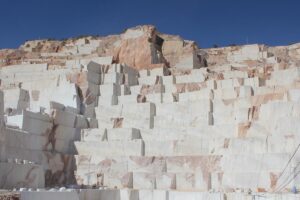
Marble is a metamorphic rock born from the compression and transformation of sedimentary stones. This slow yet powerful geological process—unfolding over millions of years—creates a compact, remarkably pure material. Marble deposits and quarries can be found across the globe. From these sites, massive blocks are carefully extracted, then cut and polished to reveal their full splendor. Each block carries within its veins a fragment of the Earth’s geological past—a testament to time, transformed into natural art.

Quarry of Crema Marfil
Marble has witnessed some of the greatest moments in human civilization. In ancient Greece, it was the soul of temples and sculptures that still captivate us today. A single glance at the Parthenon is enough to understand how stone can become a symbol of perfection. In the Roman Empire, the prized Carrara marble adorned the Colosseum, the Pantheon, and thousands of sculptures that continue to stand as legacies of that era.
Today, marble continues to hold a privileged place in our daily spaces. Its timeless beauty makes it an enduring symbol of elegance and durability. Its colors, textures, and finishes remind us that while trends change, its value remains untouched. When someone decides to purchase marble for their home or project, they are choosing a piece of history—an artful blend of craftsmanship, nature, and design.
Color and Origin: The Soul of Every Marble
When discussing the different types of marble, it’s essential to consider not only the color but also the origin—two elements that shape its character, personality, and aesthetic value.
White Marble
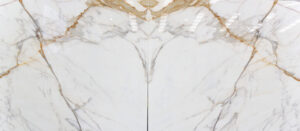
A symbol of purity and brightness. Italy’s legendary Carrara quarries offer iconic materials such as Bianco Carrara, Calacatta Gold, and Statuario—stones that have inspired designers for centuries. Other remarkable white marbles include Dover White from Namibia, Thassos and Volakas from Greece, and the luminous White Vietnam— ideal for creating timeless, radiant spaces.
Black Marble
At the opposite end of the spectrum, black marble expresses strength, sophistication, and presence. Spain is home to one of the world’s most renowned black marbles: Nero Marquina, quarried in the Basque Country. Other elegant options include Portoro (Italy), Sahara Noir (Tunisia), and Saint Laurent.
Green Marble
Exotic and deeply connected to nature. From Italy’s Verde Alpi to China’s Ming Green and Ancient Green, and the captivating Verde India, these stones introduce freshness, serenity, and organic beauty. Their tones—ranging from turquoise to deep forest green—bring personality and vibrancy to any space.
Beige and Cream Marble
Spain is a global benchmark in marble production, thanks especially to Crema Marfil, the world’s most renowned beige marble. Its open-pit quarry, located just a few kilometers from our facilities, is the largest in Europe. Its warm tone makes it a perfect bsckdrop for any style. Other timeless beige marbles include Turkey’s Travertines, Italy’s Botticino, and Daino Reale.
Pink Marble
Soft and warm, ideal for cozy atmospheres. Most pink-toned marbles come from Portugal, such as Rosa Portugués or Calacatta Rosenoir.
Grey Marble
A highly versatile natural stone suitable for all types of projects—from minimalist bathrooms to industrial-style living rooms. Grey remains one of the most sought-after colors in interior design. Italy, Greece, and Portugal offer standout options like Orobico Grigio, Bardiglio, Damas Grey, and Ruivina. Silver Wave from Greece and Pietra Grey from Iran also bring unique shades, from pearl grey to deep anthracite.
Brown Marble
Warm and refined. Ideal for creating cozy, elegant atmospheres. Spain offers renowned varieties such as Armani Bronze (Pulpis) and Light Emperador—valued for their earthy tones and uniform texture.
Blue Marble
One of the most unique treasures in the natural stone world. Its hues evoke the sea and sky, bringing calm and freshness. Highlights include Palissandro Blue (Italy), with cloud-like veining, Blue Sky (China), and the exotic Blue Savanna.
Red Marble
Spain stands out once again with its iconic Red Alicante, an emblematic stone in the natural stone industry. Other notable red marbles include Rosso Levanto and Arabescato Orobico Rosso from Italy.

Textures: Bianco Carrara, Nero Marquina, Verde Alpi, Botticino, Crema Valencia, Rosa Fantasy, Bardiglio, Silver Root, Blue Sky, and Rojo Alicante.
Italy, Spain, Greece, Turkey, Portugal… each marble, with its color and origin, tells a different story through its veins and nuances.
Marble: Key Characteristics and Uses
A Material with Soul
Every marble block is a natural masterpiece, shaped by pressure, minerals, and time. It is an organic, compact, and highly durable material.
Its rich color diversity and unique veining ensure that no two pieces are alike. Thanks to its physical properties, marble is incredibly versatile and can be used in everything from flooring and bathrooms to furniture
Common Uses of Marble
Versatile, durable, and visually distinctive, marble has become a leading material in residential, hospitality, commercial, and public projects. At Fiorantina Stone, we specialize in marble and natural stone, offering solutions that integrate seamlessly with any architectural concept or design style.
Some of its most common applications include:
- Marble flooring and wall cladding: Highly resistant and available in a wide range of finishes, marble provides both functionality and visual impact.
- Marble bathrooms: Floors, walls, sinks, or showers—marble turns bathrooms into timeless spaces that blend elegance with functionality.
- Marble staircases and fireplaces: In staircases, marble adds continuity and elegance. In fireplaces, its heat resistance and beauty transform it into the focal point of any room.
- Marble furniture and décor: Beyond architecture, marble is increasingly popular in interior design, appearing in dining tables, coffee tables, side tables, and decorative pieces.
- Art: Its durability make marble ideal for sculptures, statues, and ornamental works that embody the essence of natural stone.


Marble trends for 2025
Marble never goes out of style, but it does evolve alongside design trends. Each year, new tendencies highlight personalization, sustainability, and bold contrasts.
Deep, intense colors
Dark tones—blacks, deep greens, vibrant reds—paired with striking white veining are gaining strong momentum.
Matte surfaces and leather finishes
While polished marble remains a timeless classic, honed (matte) and leathered (textured) finishes are becoming increasingly popular for their contemporary appeal.
Marble in kitchens and bathrooms
Marble continues to take center stage in these essential spaces. White marble kitchen islands or shower walls in Nero Marquina, Verde India, Verde Alpi, or Rosso Levanto are among the most sought-after designs choices in 2025.
Sustainable design
Sustainability has become a cornerstone of contemporary design—and the natural stone industry is no exception. At Fiorantina Stone, environmental awareness guides our work and resource management. Natural stone is inherently sustainable: organic, durable, and long-lasting.
A growing trend is the creative repurposing of leftover stone—turning offcuts into decorative objects or unique design elements. This approach reduces waste while giving rise to meaningful, authentic pieces.
A perfect example is our collaboration with designer Patricia Bustos, with whom we developed an onyx lamp with a travertine marble base. A piece that proves sustainability and luxury can coexist—enhancing value, uniqueness, and storytelling.

Onyx and travertine lamp by Patricia Bustos
2025 brings a bolder vision for marble: no longer just an architectural complement, but a true protagonist in design.
At Fiorantina Stone, we work every day to bring this natural wonder to exceptional projects and to suppliers who value quality and trust. We carefully select and inspect marble blocks from around the world because we believe every project deserves a material that reflects personality, excellence, and durability.
Choosing marble with us is choosing quality, experience, and a service that cares for every detail.
Marble is far more than a surface—it’s history, art, and a timeless investment for those who want to create spaces with soul.
Discover our extensive collection of natural stone 👇